


Expedition: Hidden Wild is out on iPhone and Android
Expedition: Hidden Wild is now on the App Store for iPhone and iPad and on Google Play for Android phones and tablets. It is a nonogram game about field work, free to start, with no ads and no account. Africa still plays free in your browser.
The game
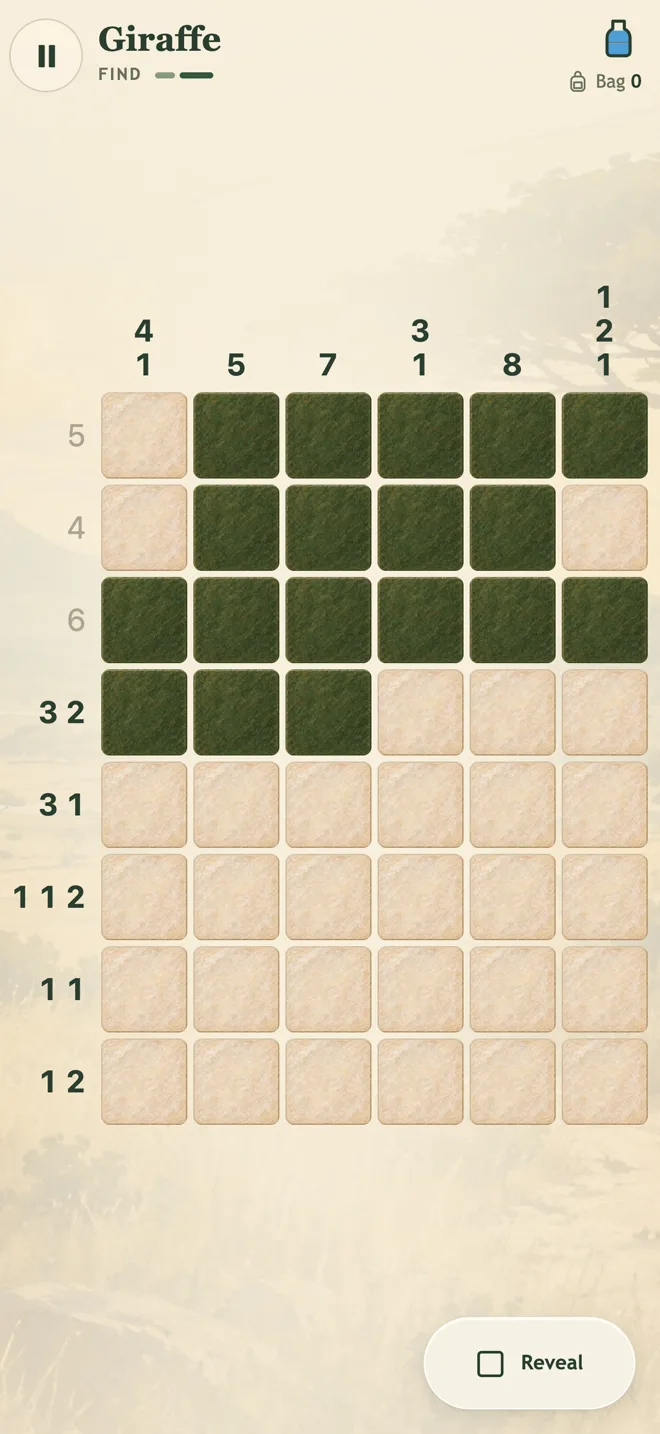
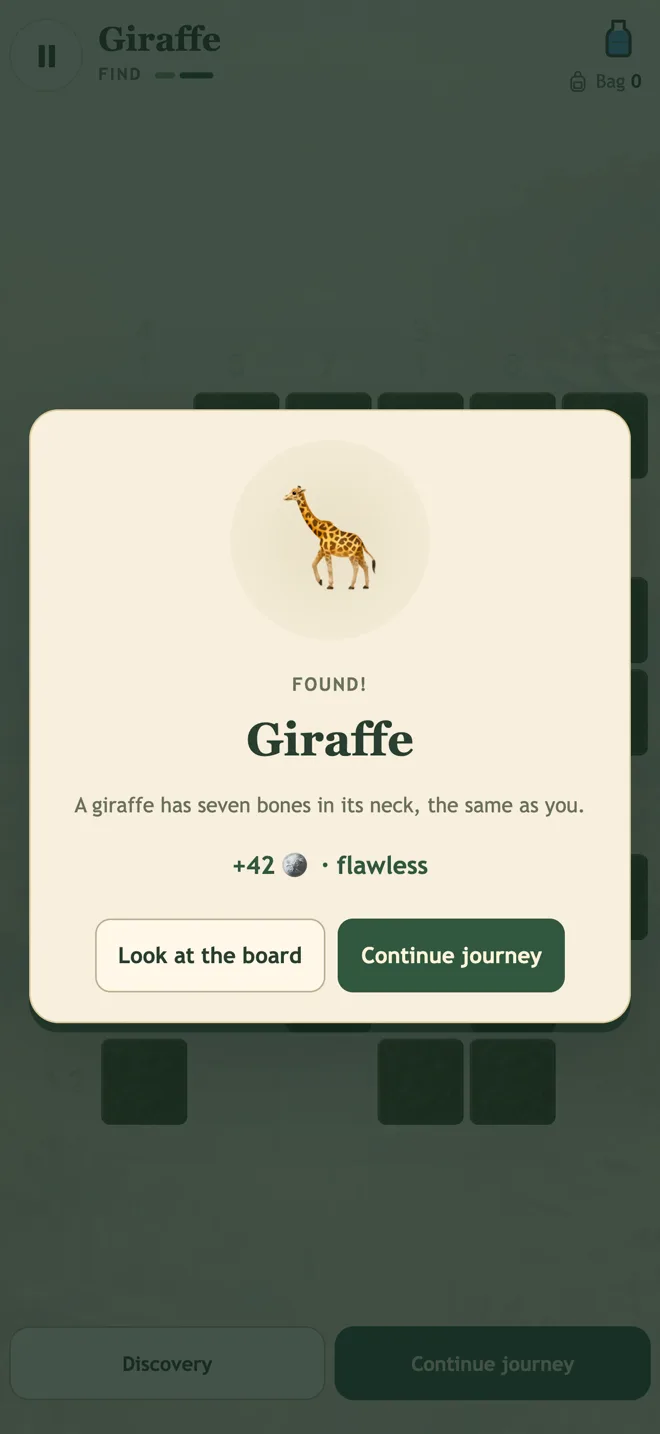
The numbers beside each row and column say how long the filled runs are. Work out the grid, turn the right cards, and a species goes into your journal with one line about it.
- A find is a short search. One to three boards in a row: the tracks, the trail, then the animal. One water bottle lasts the whole find, and a wrong card costs a sip, so a slip on the tracks weighs on the rest.
- Some cards hide a bonus. Water, coins or a material pops out when you turn the card. Tap it to take it.
- Twelve real places. Africa, the Americas, and Asia and Oceania, four expeditions each: savanna, desert, rainforest, coral reef and more. Ten finds close an expedition and earn an artifact. Four expeditions open the next region.
- Tools and skills. Spend coins on them when a board fights back. A timed skill runs on real time, even while the app is closed.
- A field school first. New players get a few short lessons, each adding one thing, before the first real find.
What is free, and what one purchase opens
Africa is free: the field school and 40 species, with the journal, the shop, every tool and every skill. When you finish it, you get 3 free outings there every 5 hours.
The Full Journey is a one-time purchase, not a subscription, at $4.99 in the US. It opens the Americas and Asia and Oceania, 80 more species on bigger boards up to 15 by 15, and outings without a limit on every finished continent. It also comes with a gift of 500 coins and 3 of every tool and skill. Restore purchase is in Settings and on the offer screen.
There are no ads, no coins for sale and no account. The game plays offline.
No grid is drawn by hand
In most nonogram games every grid is a picture, and someone draws each one. A drawn picture is easy to get wrong: change one cell and the board can have two answers, and the player has to guess. In Expedition the picture is the painted animal at the end. The grid only has to be a fair puzzle.
So a script makes the grids. It fills random grids of each size, throws out every one that line logic alone cannot solve, scores the rest by how hard they are and sorts them. Each find then takes its boards from the right part of that list, so the boards grow harder as you travel. Outings after a continent make fresh boards on the phone the same way.
The same solver runs again in the test suite. Before every release, solveByLogic solves each of the 252 boards in the game from its numbers alone and must land on exactly that grid. If a change to the generator ever made a grid that needs a guess, the tests would fail before it reached a phone.
One web build in three places
The browser game and both apps run the same web build. On the phones, Capacitor puts it in a native shell. The rules live in plain TypeScript with no DOM in them, which is why the tests run in Node without a browser.
The native side is small. It turns off text selection so a long press on the board never brings up the loupe, keeps the phone in portrait while a tablet turns freely, and sells the Full Journey: StoreKit 2 on iPhone and iPad, Play Billing on Android. The game has no server of its own. It asks the store whether this account owns the Full Journey and keeps the answer on the device, so it opens the same way offline. Apple and Google take the payment, and we never learn who bought.
The gift is given once per save. A restore or a new launch gives nothing more.
Get Expedition: Hidden Wild. Free to start, with no ads and no account.